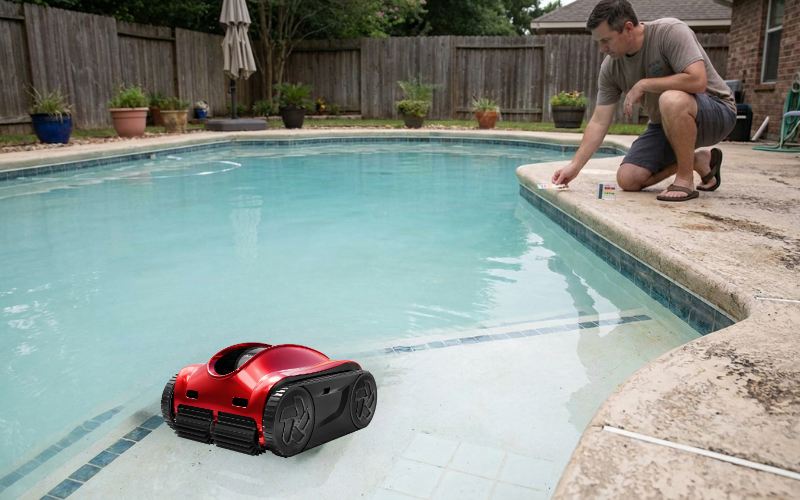
Cloudy pool water makes many owners uneasy. The pool may still look blue, but it does not look clean. Sometimes the water looks dull. Sometimes it turns milky. In other cases, the bottom becomes hard to see even though there are no leaves or large debris floating on top.
When that happens, many people turn to a robotic pool cleaner right away. That response makes sense. A cleaner is one of the most useful tools in regular pool care. It can remove dirt, collect debris, and reduce manual work. Still, cloudy water often leads to one common misunderstanding. Owners expect the cleaner to fix a water quality problem that may not be caused by surface debris at all.
A robotic pool cleaner can help in some cloudy water situations. In others, it plays only a supporting role. The key is knowing what it can actually do and where its limits begin.
Why Pool Water Turns Cloudy in the First Place
Cloudy water is not one single problem. It is a visible symptom. The cause may be physical debris, poor filtration, weak sanitizer levels, chemical imbalance, early algae growth, or a mix of several issues at once.
That is why one pool may clear up quickly while another stays cloudy even after cleaning.
Fine Particles Are One Common Cause
Many pools turn cloudy because very small particles stay suspended in the water. These may include dust, pollen, dead algae, dirt, or very fine organic matter. Large debris is easy to see and remove. Fine particles are different. They float through the water and make it look dull or hazy.
Chemistry Problems Can Also Be the Main Issue
Cloudiness can also come from unbalanced water. If sanitizer levels drop too low, algae or bacteria may begin to develop. If pH or calcium levels move too far out of range, the water may also lose clarity. In these cases, the problem is chemical, not just physical.
That difference matters because a robotic cleaner handles debris, not water chemistry.
What a Robotic Pool Cleaner Can Fix
A robotic cleaner is most helpful when cloudy water is linked to settled dirt, fine debris, or residue that keeps re-entering circulation. It can also support recovery after the pool has already started to be corrected with proper water treatment.
It Can Remove Settled Debris From the Floor
Cloudy water often comes with a layer of dust or dirt on the pool floor. This is common after storms, heavy wind, landscaping work, or long periods without cleaning. If the material stays there, it may get stirred back into the water again and again.
A robotic cleaner can help by lifting that debris out of the pool before it has another chance to spread.
It Can Support Better Overall Cleanliness
Even when the main cause of cloudiness is not surface dirt, a cleaner can still improve conditions. A cleaner reduces the debris load on the pool. That means less material breaking down in the water and fewer particles getting pushed around during circulation.
It Can Help After Water Treatment Begins Working
Sometimes cloudy water comes from dead algae or fine particles left behind after shock treatment or other chemical correction. In that stage, the water may still look poor even though the worst part of the problem has already been addressed. A robotic cleaner can help collect what settles after treatment starts doing its job.
That is one area where units like iGarden robotic pool cleaners can fit naturally into the recovery process. They are not replacing chemistry correction. They are helping remove the debris that remains after the pool starts moving back toward normal.
What a Robotic Pool Cleaner Cannot Fix
This is the part pool owners need to understand clearly. A robotic cleaner is not a full answer to cloudy water. It can help with symptoms caused by debris, but it cannot solve issues that belong to filtration, sanitation, or chemical balance.
It Cannot Correct Sanitizer Problems
If chlorine or sanitizer levels are too low, the water may stay cloudy no matter how many cleaning cycles are run. The cleaner can remove dirt, but it cannot sanitize the water. If bacteria or algae are beginning to grow, the pool still needs proper chemical treatment.
It Cannot Balance pH or Calcium
Cloudy water often appears when pH drifts too high or calcium hardness creates scaling conditions. In those cases, the water itself needs correction. A robotic cleaner has no way to fix those numbers. It may still collect debris from the floor, but the water will not become truly clear until the chemistry is adjusted.
It Cannot Replace the Filter System
Some owners treat a robotic cleaner as a substitute for the pool’s main filtration system. That is not the right way to see it. A robotic cleaner has its own filter and can capture a good amount of debris, but it does not replace the job of full water circulation and filtration. If the main filter is dirty, undersized, or not running long enough, cloudiness may continue.
How to Tell Whether the Cleaner Is the Right Tool for the Problem
When water turns cloudy, it helps to look at the pool in simple terms. Is there visible debris on the floor? Did the cloudiness appear after wind, rain, or heavy pool use? Or does the water look cloudy even though the surfaces seem clean?
The answer points toward the real issue.
Signs the Cleaner Can Help More
A robotic cleaner is more likely to help if:
- dirt is visible on the floor
- fine debris keeps returning after being disturbed
- the pool recently had storm debris or pollen exposure
- the water is improving but still has particles settling out
In these cases, cleaning the pool surface can support clarity.
Signs the Main Problem Is Elsewhere
A cleaner is less likely to solve the problem if:
- sanitizer levels are too low
- the water smells off or looks greenish
- the pool stays cloudy even with little visible debris
- the filter system has not been cleaned or checked
- chemical readings are clearly out of range
These situations call for water correction first.
What Pool Owners Should Do When Water Turns Cloudy
The best response is usually a combination of cleaning, testing, and filtration support. Most cloudy water problems improve faster when owners avoid relying on one tool alone.
Start With Water Testing
Test the water early. Check sanitizer, pH, and other basic balance indicators. If those are off, correcting them should come first.
Inspect and Clean the Main Filter
A dirty filter can make cloudy water linger much longer than expected. Backwash, clean, or inspect the filter system based on the pool setup. Good circulation is essential.
Use the Robotic Cleaner as Part of the Recovery Process
Once the pool is being chemically corrected and the filtration system is running properly, use the robotic cleaner to remove settled debris and reduce the particle load. This is where it becomes a strong support tool.
Do Not Expect Instant Clarity
Cloudy water may take time to improve. Even after the cause is identified, the pool may need repeated filtering and more than one cleaning cycle. Patience matters here.
Final Thoughts
A robotic pool cleaner can do a lot, but it cannot do everything. When pool water turns cloudy, it is helpful for removing settled dirt, reducing fine debris, and supporting cleanup after treatment begins. That makes it an important part of many recovery routines.
Still, it cannot sanitize the water, balance chemistry, or replace the main filtration system. Cloudy water often starts with a deeper issue. Owners who understand that tend to solve the problem faster.
The smartest approach is to treat the cleaner as one part of a complete response. Test the water. Check the filter. Correct the chemistry. Then use the cleaner to handle the debris that remains. That is where a robotic cleaner fits best, and that is how it delivers the most real value when the pool starts to lose clarity.